Devon Butler · 21 September 2026
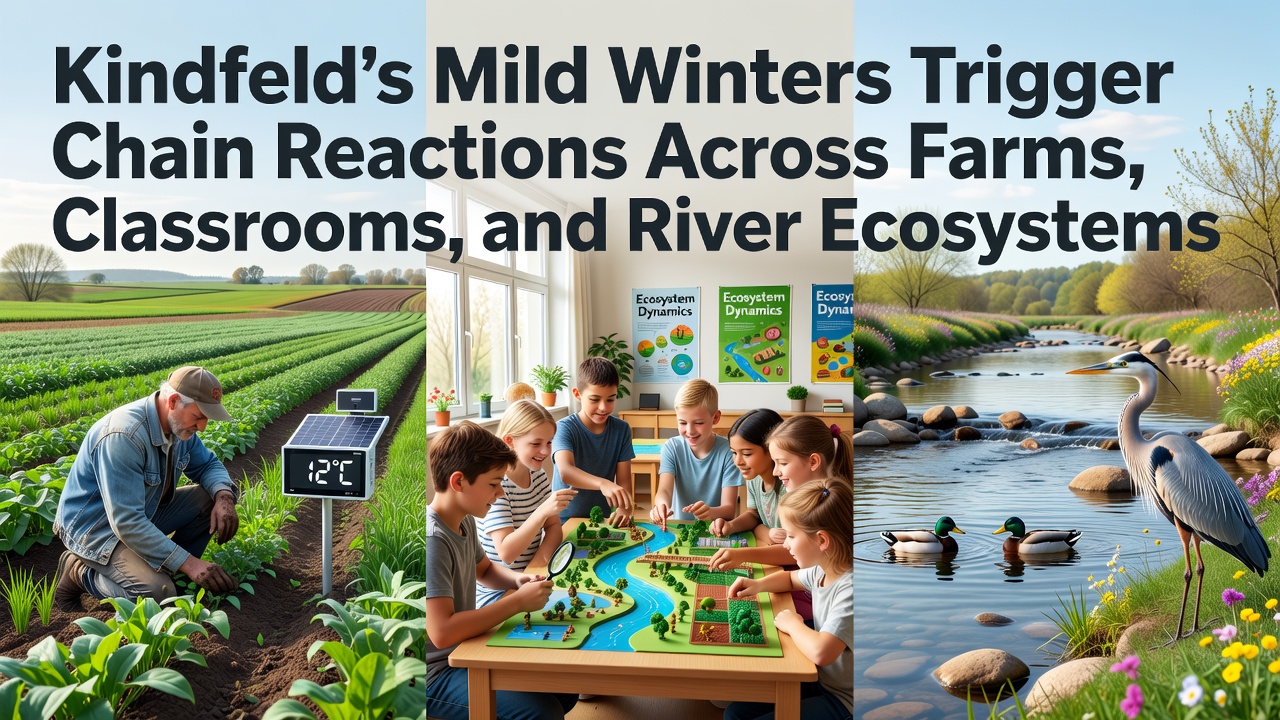
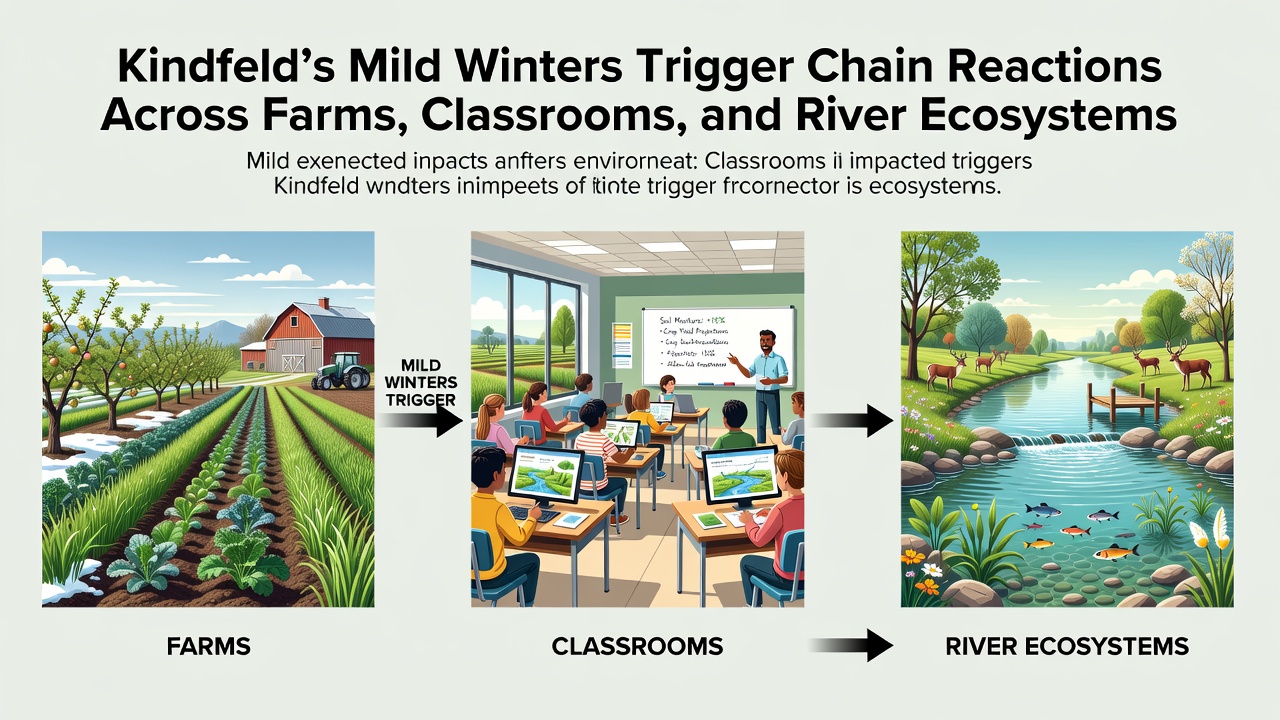
Kindfeld's Mild Winters Spark Interconnected Shifts Across Local Farms, Schools, and River Systems
Observers tracking weather patterns in Kindfeld note that milder winter conditions have produced measurable changes in agricultural cycles, educational routines, and river habitats since records began showing consistent temperature increases over the past decade, with data from 2023 through 2025 indicating average winter temperatures rising by 1.8 degrees Celsius compared to the 1990-2010 baseline.
Researchers at regional agricultural stations report that reduced frost days allow certain insect populations to overwinter at higher survival rates, which in turn pressures crop yields for potatoes and winter wheat during the subsequent growing season, while farmers adjust planting schedules earlier in March to match altered soil temperatures.
Effects on Agricultural Operations
Soil moisture levels remain elevated longer into the spring because of lighter snow cover, leading operators to modify drainage systems on fields that once relied on natural freeze-thaw cycles for compaction relief, and cooperative reports from Kindfeld's farming collectives document a 12 percent increase in fungicide applications between 2024 and 2025 as a direct response to these conditions.
Extended growing windows also support second harvests of certain leafy greens, yet they require additional irrigation planning as summer rainfall patterns shift, according to monitoring data collected by the local extension service.
Changes Observed in Educational Settings
Schools in Kindfeld have recorded adjustments to outdoor science programs because pollen seasons now begin two to three weeks earlier, prompting administrators to coordinate with health services for increased allergy management supplies during late winter months, while field trip schedules for river studies move forward to avoid peak insect activity periods.
Energy consumption logs from district buildings show lower heating demands during December through February, freeing budget lines that administrators redirect toward expanded indoor lab equipment for climate-related experiments, and September 2026 marks the start of a new curriculum module on local ecosystem monitoring developed in partnership with the regional environmental office.
Impacts on River Ecosystems
Water temperature readings from the Kindfeld River show an average rise of 0.9 degrees Celsius during winter months, which alters migration timing for several fish species and accelerates algal growth cycles that affect oxygen availability downstream, according to continuous sensor networks maintained by the state water authority.
Bank erosion increases in sections where ice no longer provides seasonal stabilization, prompting local conservation groups to install additional vegetative buffers along 4.2 kilometers of shoreline in 2025, while macroinvertebrate surveys indicate shifts in species composition that researchers link to the milder conditions.
These interconnected changes create feedback loops where earlier farm runoff coincides with reduced river dilution capacity, raising nutrient concentrations that further influence both agricultural planning and classroom water quality testing activities.
Broader Patterns and Ongoing Monitoring
Integrated data sets compiled by university teams from multiple European institutions reveal similar trends across comparable mid-latitude regions, with Kindfeld serving as one case study site where cross-sector effects appear within a single watershed boundary, and projections shared at a September 2026 symposium in neighboring districts outline scenarios for continued temperature moderation through 2030.
Community mapping projects now incorporate real-time river and farm sensors that feed into school dashboards, allowing students to track variables such as soil temperature and dissolved oxygen alongside historical records maintained by the European Environment Agency.
Conclusion
Chain reactions from milder winters continue to reshape daily operations and long-term planning across Kindfeld's farms, classrooms, and river networks, with monitoring programs providing the factual foundation for adaptive responses documented through 2026.